THREE:But the Comprehension Bill was not so fortunate. Ten bishops, with twenty dignified clergymen, were appointed as a commission to make such alterations in the liturgy and canons, and such plans for the reformation of the ecclesiastical courts as, in their opinion, best suited the exigencies of the times, and were necessary to remove the abuses, and render more efficient the services of the Church. The list of these commissioners comprised such men as Tillotson, Stillingfleet, Sharp, Kidder, Hall, Tenison, and Fowler. They met in the Jerusalem Chamber, and began their labours preparatory to this great comprehensive bill. In order to sanction these changes, Convocation was summoned, and then the storm broke loose. The Jacobites and the discontented cried out they were going to pull the Church down; the High Churchmen declared it was a scheme to hand over the Church to the Presbyterians; the Universities cried that all the men engaged in the plan were traitors to the true faith, and the king himself was not spared. The High Churchmen who were included in the commission fled out of it amain, and Convocation threw out the whole reform as an abomination. Convocation having given this blow to all hopes of ecclesiastical reform, was prorogued to the 24th of January, 1690, and on the 6th of February was dissolved with the Parliament, nor was it suffered to meet again for business till the last year of the reign of William.
FORE:CHAPTER XII. REIGN OF GEORGE III. (continued).
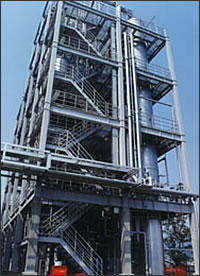
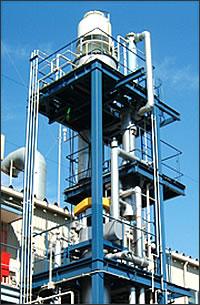
Methanol refinement systems, amyl alcohol refinement systems, ethanol refinement systems, hexanol distillation systems, propanol refinement systems, cyclohexanol distillation systems, isopropanol dehydration systems, ethylene glycol recovery systems, and butanol distillation systems.
FORE:Much opposition was excited by the part of Mr. Stanley's letter to the Duke of Leinster which spoke of "encouraging" the clergy to give religious instruction, and requiring the attendance of the scholars at their respective places of worship on Sunday to be registered by the schoolmaster. This was treading on religious ground, and committing both Protestants and Catholics to the actual support of what they mutually deemed[359] false. But the Government were driven to this course by the cry of "infidelity" and "atheism" which the new plan encountered as soon as it was proposed in Parliament. Explanations were afterwards issued by authority, showing that the "encouragement" of religious instruction meant only granting "facility of access" to the children out of school hours, not "employing or remunerating" the teachers. The Commissioners very properly treated the Bible as a book for religious instruction; but so far from offering the sacred volume an "indignity," or "forbidding" its use, they said: "To the religious instructors of the children they cheerfully leave, in communicating instruction, the use of the sacred volume itself, as containing those doctrines and precepts a knowledge of which must lie at the foundation of all true religion." To obviate every cavil, however, as far as possible, without departing from the fundamental principle of the Board, it was arranged that the Bible might be read at any hour of the day, provided the time was distinctly specified, so that there should be no suspicion of a desire to take advantage of the presence of Roman Catholics. This satisfied the Presbyterians, who nearly all placed their schools in connection with the Board. But the great body of the Established clergy continued for some time afterwards hostile, having put forward the Church Education Society as a rival candidate for Parliamentary recognition and support. Its committee declared that the national system was "essentially defective" in permitting the Catholic children to refuse the Bible. They said this permission "involves a practical indignity to the Word of God," and that it was "carrying into effect the discipline of the Church of Rome, in restricting the use of the inspired writings." This was the grand charge against the Board, the vital point in the controversy.This Act, which repealed the Test Act, provided another security in lieu of the tests repealed:¡ª"And whereas the Protestant Episcopal Church of England and Ireland, and the Protestant Presbyterian Church of Scotland, and the doctrine, discipline, and government thereof respectively are by the laws of this realm severally established permanently and inviolably, I., A., B., do solemnly and sincerely, in the presence of God, profess, testify, and declare, upon the true faith of a Christian, that I will never exercise any power, authority, or influence which I may possess by virtue of the office of ¡ª¡ª, to injure or weaken the Protestant Church, as it is by law established in England, or to disturb the said Church, or the bishops and clergy of the said Church, in the possession of any rights and privileges to which such Church, or the said bishops and clergy, are or may be by law entitled."
Hexane distillation systems, tall oil distillation systems, benzene distillation systems, lubricating oil refinement systems, xylene-free distillation systems, low-boiling gas distillation systems, ethylbenzene recovery systems, fusel oil distillation systems, naphthalene distillation systems, propylene recovery systems, and turpentine oil distillation systems.
FORE:The invasion of Scotland was again brought under his notice, and strongly recommended by his chief confidant and minister, Baron Gortz. Charles now listened with all his native spirit of resentment, and Gortz immediately set out on a tour of instigation and arrangement of the invasion. He hastened to Holland, where he corresponded with Count Gyllenborg, the Swedish Ambassador at London, and Baron Spaar, the Swedish Minister at Paris. He put himself also into communication with the Pretender and the Duke of Ormonde. The scheme of Gortz was able and comprehensive. A peace was to be established between Charles and his great enemy and rival, Peter of Russia. They both hated George of Hanover and England, and by this union might inflict the severest injuries on him. Next a conspiracy was to be excited against the Regent of France, so as to prevent him aiding England according to the recent Treaty, and all being thus prepared, Charles XII. was himself to conduct the army of twelve thousand veterans destined to invade Scotland, and, if supported by the Jacobites, England.The same evening the new prison of Clerkenwell was broken open, and all the prisoners were let loose. These joined the drinking, rabid mass, and, in their turn, attacked and gutted the houses of two of the most active magistrates¡ªSir John Fielding and Mr. Cox. As they went along, they compelled the inhabitants to illuminate their houses, under menace of burning them down. Everywhere they seized on gin, brandy, and beer, and thus, in the highest paroxysm of drunken fury, at midnight they appeared before Lord Mansfield's house, in Bloomsbury Square. He was quickly obliged to escape with Lady Mansfield by the back door, and to take refuge in the house of a friend in Lincoln's Inn Fields. The mob broke in, and, having demolished the doors and windows, proceeded to destroy and fling out into the square the furniture, pictures, and books, of which their fellows outside made several bonfires. Then perished one of the finest libraries in England, not only of works of law but of literature, which his lordship, through a long course of years, had been collecting.
Ether distillation systems, camphor distillation systems, epichlorohydrin distillation systems, aniline distillation systems, dioxane refinement systems, acetonitrile distillation systems, furfural refinement systems, formalin distillation systems, cyclohexane distillation systems, monoethanolamine rectification systems, polyglycol ether distillation systems, dimethylformamide recovery systems, acrylic glycol ether distillation systems, acrylonitrile refinement systems, acetone recovery systems, pyridine distillation systems, methyl ethyl ketone recovery systems, picoline distillation systems, methyl isobutyl ketone recovery systems, and acetaldehyde recovery systems.